
Your home is likely your retreat, the place you go to switch off, wind down, and enjoy your family and friends' company. For this reason, and rightly so, protecting your home is probably one of your top priorities.
If you want to be confident your home is safe and secure, you need to consider all the threats that could damage it. This includes knowing the signs of a leak and what to do if you spot any such signs in your property. Read on to discover some of the main signs that there is a leak in your home and how a professional leak detection service can help.
Leak damage
Unfortunately, a leak in the home is something a few of us will one day encounter, but why is leak damage so serious? In mild cases, leak damage can cause mould, stains, and damage to hardwood floors. However, if the problem is left or ignored this can cause eroding to your plumbing or even comprise your foundations. But where can leaks come from? One of the more common causes of a leak in your home is your water pipes.
If these pipes leak or burst, it may be hours before you notice – and in that time, they can severely damage your home. Walls can also hide leaks, with water escaping from pipework concealed within them. Leaks may also originate outside the building if there are cracks in foundations, windows, or doors.
In some cases, the source may be a central heating leak, but damage is often hidden - but how do you spot it?
Water stains
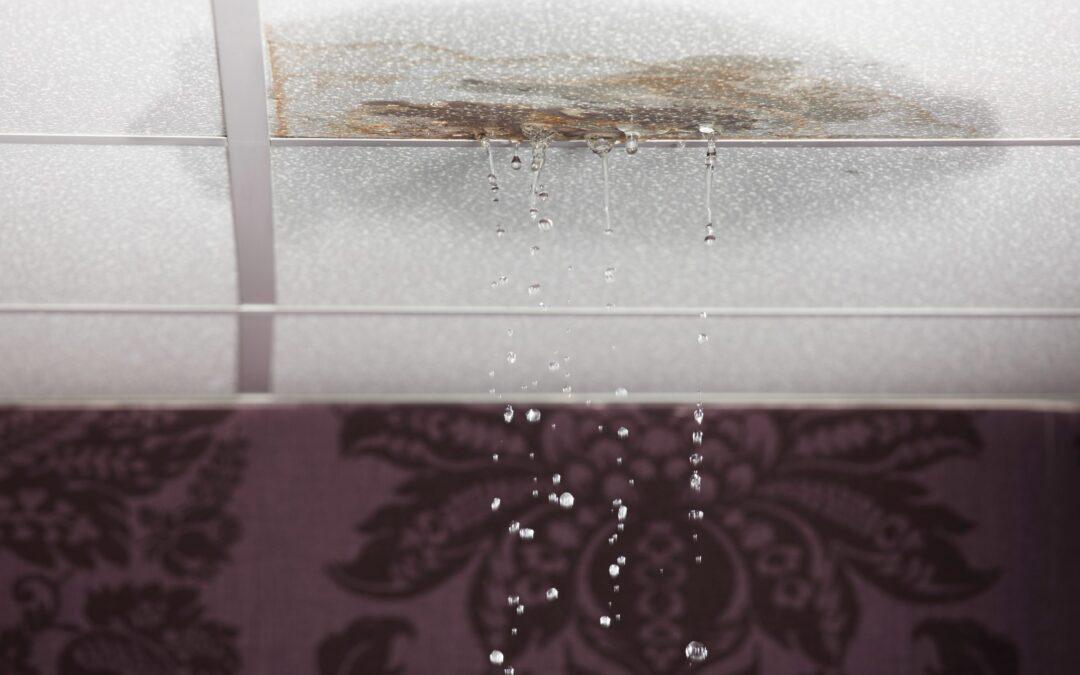
One of the easiest ways to spot a leak is a stain on the walls or ceiling of your home. These stains are usually yellow or brown marks where the water from your leak has reached the surface of your wall and dried. The stain may also be damp as the water from the leaks makes its way through the wall.
This damp water may cause the paintwork around the wall to peel and in extreme cases even cause the wall to buckle or crack. There are many causes for these leaks from interior water pipes to exterior cracks, but the main thing is you know how to spot them.
Swelling walls
Sometimes a leak can cause the wall or ceiling to swell. If left untreated the leak can progress allowing the swelling to mature and eventually making the entire wall or ceiling sag. One positive is these signs are usually easy to spot. In their milder form, the swelling will be a small bubble-like patch between your paintwork and the wall's surface.
Damp smells
In some cases, a leak can be identified from a damp smell in a room or throughout your home. Damp has a very distinct musty smell and can be easily identified if present in a home. This smell is usually the telltale sign of dampness if there are no visual clues.
Respiratory issues
Many studies have suggested that dampness can lead to health issues, the most common of which being respiratory, but why does damp cause this? Humid air alone is more difficult for us to breathe. This is because the moist air triggers nerves in our body to restrict our airways making it much harder for air to travel through the respiratory system.
Another cause of respiratory problems from excess moisture is mould. A warm, damp environment is a perfect breeding ground for mould and thus many houses suffering from damp also experience mould problems.
If mould does begin to grow in your home there will likely be tiny spores circulating the air. These spores can easily find their way into your lungs causing a variety of health problems, such as shortness of breath, chesty coughs, the onset of asthma and a higher sensitivity to chest infections. Perhaps most importantly these issues affect the most vulnerable people in your home such as children and the elderly. However, these issues are easy to spot and you can then get down to the business of identifying the leak.
Sudden change in boiler pressure
Another common sign of a water leak in your home could be a dramatic change in your boiler pressure. Water in your boiler passes through a small valve before it enters your central heating system. This valve must push against the water already in the system which in turn raises the water pressure in your heating system.
If you have a leak somewhere in the pipework your boiler's valve will have less resistance which, in turn, will cause the pressure to drop. Therefore, if you notice a sharp drop in your boiler's pressure the most likely cause will be a leak. This same principle also applies to the water in your taps and showers.
Case study
One of our previous clients came across this very issue. They noticed their boiler's pressure was dropping to zero after less than an hour from topping up. Only a very small patch of damp was visible in the house and apart from this, there were no clear visual signs of a leak. After identifying the issue this client contacted us for some professional advice. Our engineers concluded the cause of the issue would likely be the central heating pipeline and used gas tracing to identify the leak. This example proves that even when there are no obvious signs of a leak there are still ways to identify one.
Lack of running water
As we’ve mentioned, issues with your regular water system can also be signs of a leak. For example, if you suddenly lose pressure in your hot water system or if your shower pressure reg dips.
Case study
A past client of ours approached us complaining about a lack of hot water in their home. As expected a leak was detected in the hot water pipe leading from the boiler and after some careful excavation, the leak was accurately identified.
Spotted any of these? Contact a leak detection service
When push comes to shove nothing beats professional help. Let’s say you suspect you have a leak but you’re not certain. Perhaps you have a slight damp smell that comes and goes, or your water pressure drops from time to time. The best option is to get help and act fast. The sooner you approach a trusted expert the sooner you can put your mind at ease or, if the worst does happen, the sooner you can get it fixed.
Our trusted domestic leak detection services will identify a leak in your home efficiently and with as little intrusion as possible. Our methods range from gas tracing to intrusive access. So if you’re unsure and need a professional's eyes, calling for help is always the best option. After all, it’s just not worth risking.
If you call in the cavalry there are many methods that professionals might use to detect a water leak in your home. Most of the equipment is designed specifically for leak detection making it reliable and efficient. What are these methods, though, and how do they work?
Video inspection equipment
This method does what it says on the tin. A small camera is fitted to long flexible cables and then interested into pipes to find the source of the leak
Listening discs
This technology uses acoustics and sound design to amplify the noise of any leaking water making it an ideal method for finding leaks in walls
Gas tracing
Here a mixture of 5% hydrogen and 95% nitrogen is used to replace the missing water in a leaking pipe. A sensitive gas tracer can then detect any gas that has escaped from the pipe, even if it's just a few parts per million!
Thermal imaging cameras
This technique can be used on any hot water system helping to detect those leaks impossible to find with the naked eye.
Secondary leak detection
This method is less common as it requires a more permanent fitting. Nonetheless, the technique involves detecting differences in water pressure within a pipe network. Strategically positioned pressure causes can then accurately determine the problem area.
Clearly, there are many ways you might identify a leak in your home. From something as simple as a strange smell to dropping pressure in your boiler, leaks show their signs in all sorts of ways. The key is being vigilant. Leaks can affect your home in many ways and the bottom line is they could significantly reduce the safety and value of your home. If you’ve got any questions, or want to discuss a potential leak in your home, contact us today.