
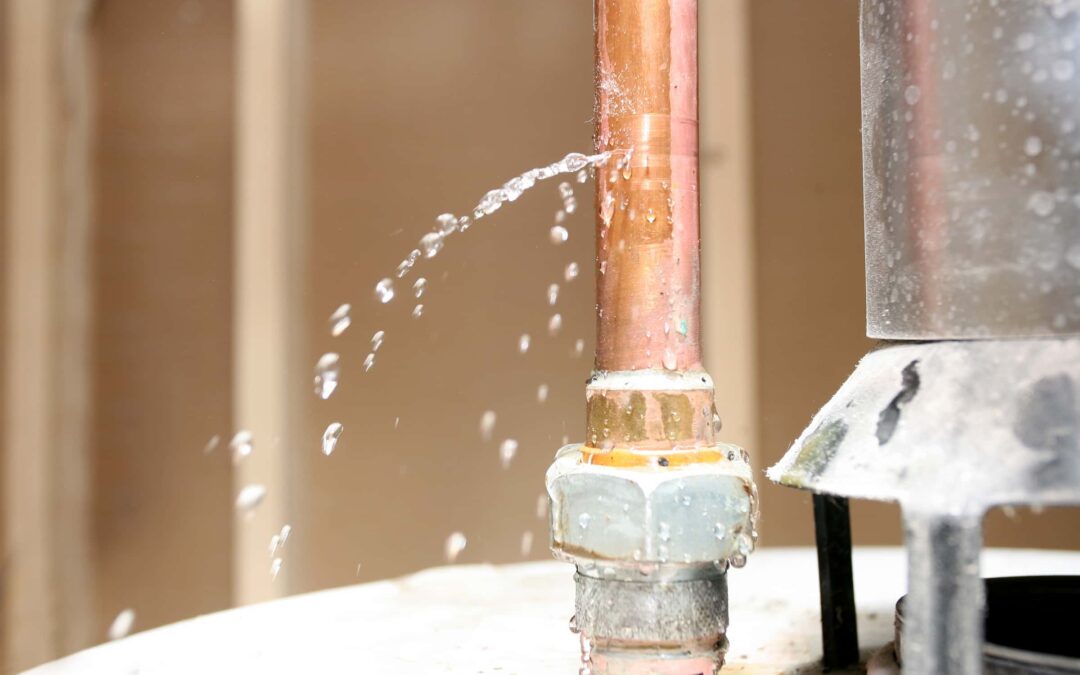
Water leaks are rarely obvious. While a burst pipe under the kitchen sink is easy to spot, most household leaks develop quietly behind walls, beneath floors, or underground. Left unchecked, even a small hidden leak can cause structural damage, mould growth and expensive repairs.
Understanding how to trace a water leak is the first step in protecting your property. In this guide, we explain how leaks occur, the signs to look for, the step-by-step process of identifying the source, and when it’s time to contact a professional leak detection specialist near you.
Why Water Leaks Are So Difficult to Find
Modern homes are built with pipework concealed inside walls, ceilings, floors and beneath concrete slabs. While this keeps systems out of sight, it also makes leaks harder to detect. By the time you notice damp patches or warped flooring, the water may have been escaping for weeks or even months.
Hidden leaks are particularly common in central heating systems, mains water supplies and bathrooms where pipe joints are under constant pressure. Damaged roofing and deteriorated seals around baths or showers can also allow water to seep slowly into surrounding materials.
Because water travels along structural elements before appearing elsewhere, the visible damage is not always directly above or below the leak itself. This is why a careful and methodical approach is essential.
Common Causes of Household Water Leaks
Before tracing a leak, it helps to understand what may have caused it. Ageing pipework is a frequent culprit, particularly in older properties where copper or plastic joints may degrade over time. Corrosion, shifting foundations and poor installation can also create weak points.
Central heating systems often develop leaks due to pressure fluctuations or worn seals around radiators and valves. In bathrooms, cracked grout, failed silicone seals and damaged shower trays can allow water to penetrate walls and flooring.
Externally, underground mains pipes can crack due to ground movement, tree root intrusion or freezing temperatures. Roof leaks may develop from slipped tiles, deteriorated flashing or blocked gutters, forcing water beneath coverings.
Identifying the likely cause can narrow down your search and help determine whether the issue is internal plumbing or external water ingress.
Step One: Check Your Water Meter
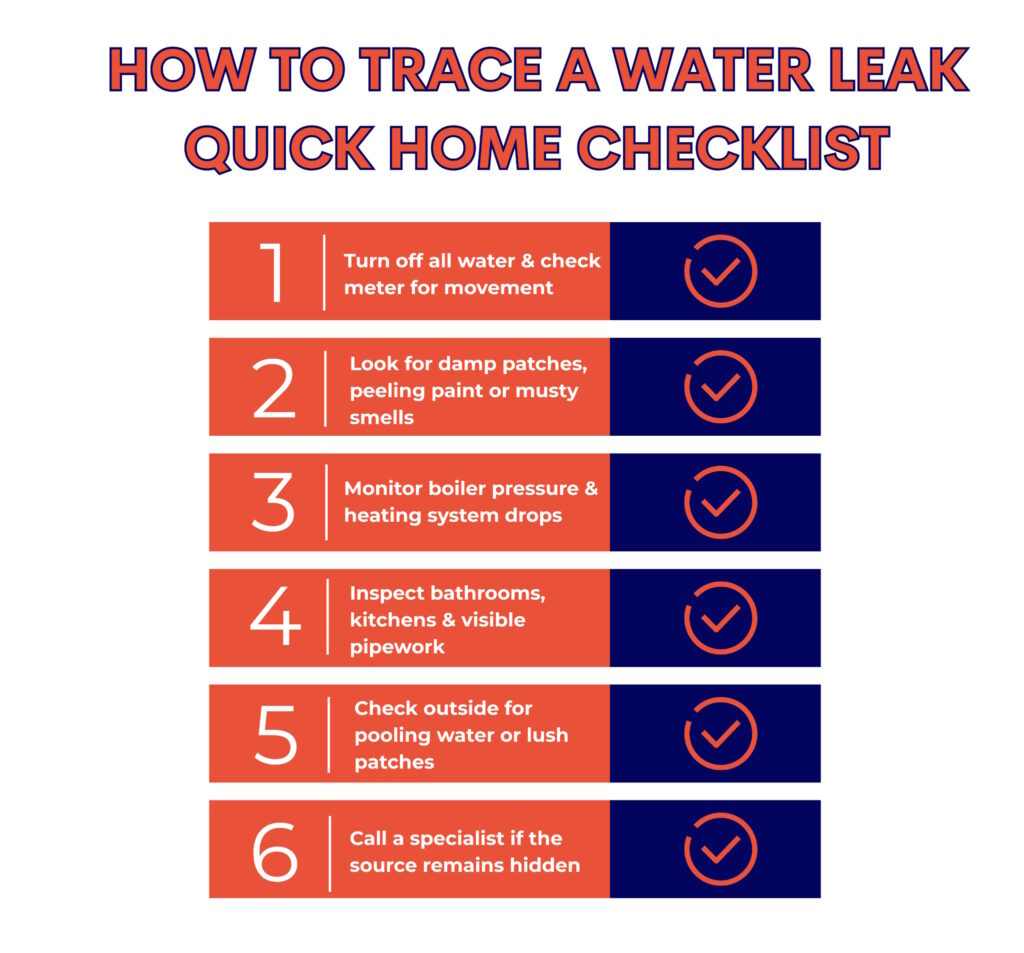
One of the simplest ways to begin tracing a water leak is by using your water meter. First, ensure all taps, appliances and heating systems are switched off. Take a meter reading and wait at least 30 minutes without using any water. If the reading changes, this strongly suggests a leak somewhere within your system.
This test is particularly helpful for identifying underground or hidden pipe leaks where no visible damp patches are present.
Step Two: Look for Visible Warning Signs
Although hidden leaks are concealed, they often leave subtle clues. Discoloured patches on ceilings or walls, peeling paint, bubbling plaster and warped skirting boards are all warning signs. Musty odours may indicate trapped moisture within cavities.
Pay attention to unexplained increases in your water bill or a sudden drop in boiler pressure. Persistent damp carpets or flooring that feels warm in isolated areas can suggest a leaking pipe beneath.
It is important not to ignore even minor signs. Early intervention can significantly reduce the extent of structural drying and repair work required later.
Step Three: Isolate Sections of Your Plumbing
If you suspect the leak is internal, isolating sections of pipework can help narrow the location. Turning off valves to specific appliances, bathrooms or heating zones and monitoring changes can identify the affected area.
However, this process can be time-consuming and may not pinpoint the exact source, especially if the leak is under flooring or embedded within concrete.
When to Call a Leak Detection Specialist Near You
If the source remains unclear, it is time to contact a leak detection specialist near you. Searching online for “water leak detection companies near me” may bring up numerous options, but it is important to choose experienced professionals who use non-intrusive techniques.
At Leak Tracers Direct, we coordinate trusted domestic and central heating leak detection specialists who use advanced diagnostic equipment to locate hidden leaks accurately. Our approach always begins with non-destructive methods to minimise disruption to your property.
Calling a professional early can prevent unnecessary damage caused by exploratory digging or removing large sections of flooring without confirmation.
How Professional Leak Detection Works
Professional water leak detection is far more advanced than simply looking for damp patches. Specialists use a range of technologies depending on the type and location of the suspected leak.
Thermal imaging cameras detect temperature variations behind walls and beneath floors, highlighting areas where water is escaping. Acoustic listening devices identify the sound of water escaping under pressure, even through concrete.
Tracer gas testing is particularly effective for central heating and underground pipe leaks. A safe gas mixture is introduced into the system, and highly sensitive detectors locate where it escapes. Moisture mapping tools measure damp levels within building materials to track the spread of water.
For underground mains leaks, engineers may use ground microphones and correlation equipment to pinpoint the precise location without extensive excavation.
This combination of methods ensures that only a small, controlled area needs to be opened for repair, keeping disruption to a minimum.
Tracing Roof and External Leaks
Roof leaks require a slightly different approach. Water ingress from damaged tiles or flashing may travel along rafters before appearing inside. A thorough inspection of loft spaces, insulation and roof coverings is essential.
External pipe leaks can sometimes be identified by unusually lush patches of grass, subsidence, or pooling water during dry weather. However, professional underground pipe locators provide far greater accuracy.
In both cases, early diagnosis reduces the risk of long-term structural deterioration.
The Importance of Structural Drying
Finding the leak is only part of the solution. If water has been escaping for some time, moisture may remain trapped within walls, floors and insulation.
Professional structural drying is essential to prevent secondary damage such as mould growth, timber decay and weakened plasterboard. Accredited drying technicians use specialist equipment to remove hidden moisture safely and efficiently.
At Leak Tracers Direct, we coordinate not only the detection of the leak but also the full structural drying process. Electricity usage from drying equipment is carefully recorded, allowing eligible costs to be reclaimed through your insurer where cover applies.
Managing the Insurance Claim
Many homeowners are unsure whether leak detection is covered by their insurance. In many cases, policies include “trace and access” cover, which pays for locating the leak and repairing the damage caused by accessing it.
However, navigating an insurance claim can be stressful, particularly when you are already dealing with water damage.
Leak Tracers Direct provides FCA-regulated insurance claim support, handling negotiations with insurers and coordinating approved repairs once liability is confirmed. This end-to-end approach removes the burden from homeowners and ensures the claim is managed fairly and efficiently.
Why Early Leak Detection Matters
Delaying action when you suspect a leak can significantly increase repair costs. Water weakens structural materials over time, damages electrical systems and creates ideal conditions for mould growth.
By understanding how to trace a water leak and recognising when to contact a professional water damage restoration service near you, you protect both your property and your finances.
Professional leak detection not only identifies the source accurately but also provides documented evidence to support your insurance claim.
Get in Touch
If you are searching for a leak detection specialist near you or are concerned about unexplained damp in your home, acting quickly can prevent further damage and unnecessary disruption.
At Leak Tracers Direct, we connect you with trusted leak detection experts and manage the entire process from detection through to structural drying and insurance claim support.
If you suspect a hidden leak in your home, contact us today to arrange professional assistance and protect your property with confidence.